Larry Kahaner

Archive for the category “plotting”

Why Writing A Novel Is Like The AK-47 Rifle

Why Writing A Novel Is Like The AK-47 Rifle

By Larry Kahaner

ak image

The AK-47 is the most used weapon in the world, but it’s not perfect.

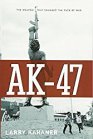
Several years ago I wrote a non-fiction book about the AK-47 rifle. It was not a gun book, per se, but a history about how this ubiquitous weapon changed the world, certainly the world of war. For those of you who never watch television, read the web or see a magazine, the AK-47 is ‘the gun’ that you see everywhere. It’s what we think an automatic weapon should look like with its distinctive banana-shaped magazine (the part that holds bullets). It’s the most popular weapon in the world because it is simple, never jams, it’s cheap, and anyone can use it effectively. It is the choice of terrorists, mercenaries and even government armies. (Click here to watch a book promotion video that I made.)

What does this have to do with writing a novel? I’m getting there.

The inventor, Mikhail Kalashnikov – the weapon also goes by his last name – knew that it was not a perfect weapon, that it had flaws but he knew that it could operate underwater or be buried in the ground, dug up a year later, and still work. It’s not a precison, beautifully- constructed weapon like the U.S. M-16 rifle, but it did the job and, unlike the M-16, it didn’t have to be taken apart on a regular basis to be cleaned. In fact, the reason why the AK works so well is because it is not perfect. The parts don’t fit precisely together so dirt and gunk don’t accumulate in the mechanism. It just kicks out the muck and keeps firing.

One of the sayings in Kalashnikov’s Soviet Union was “Perfection is the enemy of good enough,” and I was reminded of this while reading Art & Fear by David Bayles and Ted Orland. It’s a great read for all artists including writers.

An important point the authors make is that many writers are stopped in their tracks because they’re trying to achieve perfection on the first go-around.

They write:

“To demand perfection is to deny your ordinary (and universal) humanity, as though you would be better off without it. Yet this humanity is the ultimate source of your work; your perfectionism denies you the very thing you need to get your work done. Getting on with your work requires a recognition that perfection itself is (paradoxically) a flawed concept…. For you, the seed for your next art work lies embedded in the imperfections of your current piece. Such imperfections (or mistakes, if you’re feeling particularly depressed about them today) are your guides – valuable, reliable, objective, non-judgmental guides – to matters you need to reconsider or develop further. It is precisely this interaction between the ideal and the real that locks your art into the real world, and gives meaning to both.”

Being perfect is a hot button issue for me and I’ve discussed it in previous blogs. One reason for my interest is that I see too many writers not writing because they’re waiting for that perfect moment, that perfect phrase or that perfect muse to enter the room. That’s not how real writing (as opposed to dilettante writing) works. Real writers write and what comes out is never, ever perfect.

It bothers me greatly when I see writers paralyzed by their work, losing confidence, patience and even perspective because they want it to be perfect. Worse yet, not even starting or quitting because they don’t believe it will end up being perfect.

I know that ‘writing prompts’ are really popular these days so here’s one for you. Write something with the understanding that it will not be perfect. Give yourself permission to make  mistakes knowing that you can fix them later.

The freedom is exhilarating and your work will benefit. Without the constraints of perfection, you will see a marked difference in your book. That’s why National Novel Writing Month spells success for many authors. Writing 50,000 words in a month doesn’t allow you time to seek perfection, but you do rack up the words for more conscious and thoughtful rewriting later.

Kalashnikov had said that he wanted his weapon to be better designed, but he didn’t have the skills (he was a tinkerer not an engineer) or the know-how. He just made something that worked and put it out for the world to use.

That’s all you really want for your novel. It doesn’t have to be perfect; it just has to work for the reader. Fix the big mistakes, for sure. The smaller ones, too. Make it as good as you can -don’t cheap-out on the rewrites – and then let it fly.

Let readers decide if it’s perfect or not.

Write the Steamiest Sex Scenes Ever: Guaranteed

Write the Steamiest Sex Scenes Ever: Guaranteed

By Larry Kahaner

When writers ask me how to write sex scenes, I always give them an answer that they hate.

Don’t do it.

Why?

It rarely works and makes you look like an idiot.

Men's Health UK

It’s what you don’t see that’s sexiest (Men’s Health UK)

I’m not sure why, but most authors, even famous and popular ones, can’t write a sex scene to save their lives. I have my theories as to why this is true but it doesn’t matter. No matter whom the author, their sex scenes often come out ludicrous or mechanical. Thriller writers are the worst offenders as are those transitioning from non-fiction to fiction.

Oddly enough, this even holds true for erotica writers. Each time they try to describe the sex act in a new and novel way, with the aim of titillating their readers with something different (and I applaud them for their effort), the result is often farcical.

I don’t mean to say that there aren’t strong sex scene writers out there. There are, but they are rare.

This dearth of bad sex scene writing even has its own award given by the Literary Review. Among the short list finalists his year were two Booker-winning novelists and one from a Pulitzer Prize winning author.

A Guardian article noted: “The Literary Review sets out to find ‘the most egregious passage of sexual description in a work of fiction,’ and describes it as ‘Britain’s most dreaded literary prize.’ Established by Auberon Waugh in 1993, its purpose is to draw attention to ‘perfunctory or redundant passages of sexual description in modern fiction, and to discourage them,’ with former winners including Sebastian Faulks, A.A. Gill and Melvyn Bragg.”

Here’s some good (bad) news. “I think this is one of the strongest shortlists in recent years, containing some real literary heavyweights,” said Literary Review’s Jonathan Beckman.

Here’s an article about the winner, Ben Okri for the passage in his book The Age of Magic. This is Okri’s 10th book. He won the Booker in 1991 for The Famished Road and has received, among other prizes, the Commonwealth Writers’ prize, the Aga Khan Prize for Fiction and the Guardian Fiction prize. He’s no slouch but look what he wrote:

“When his hand brushed her nipple it tripped a switch and she came alight. He touched her belly and his hand seemed to burn through her. He lavished on her body indirect touches and bitter-sweet sensations flooded her brain. She became aware of places in her that could only have been concealed there by a god with a sense of humour.

“Adrift on warm currents, no longer of this world, she became aware of him gliding into her. He loved her with gentleness and strength, stroking her neck, praising her face with his hands, till she was broken up and began a low rhythmic wail … The universe was in her and with each movement it unfolded to her. Somewhere in the night a stray rocket went off.”

Okri’s response to winning: “A writer writes what they write and that’s all there is to it.”

So, what to do about your sex scene?

Leave it largely to your readers’ imagination. Start with this: “She took his hand and they walked into the bedroom. Darkness fell.” Spiff it up a bit, talk about clothing, smells and lighting but NOT too much. Your readers will fill in the blanks with their own imaginations, and I can bet that it will be a million times sexier than what you could describe.

How to Screw Up Your Novel: The Drop-In Character

How to Screw Up Your Novel: The Drop-In Character

By Larry Kahaner

I just finished a terrific book that had one major flaw. It’s a shame, too, because the book’s author is up there with Baldacci, Child and Crais. He’s not nearly as well known as these guys but he’s that good.

Beware the drop-in character.

Beware the drop-in character.

I won’t tell you the book or author so as not to embarrass him but my reason for telling you this is so you won’t make the same mistake. This goes for fiction and non-fiction writers.  Both can be prone to the same error.

The book is a business thriller that starts off with a bang (literally, if you know what I mean) and proceeds to bring in genius characters with their foibles, oddities and random proclivities that make you smile and keep reading. The plot concerns financial shenanigans. There’s a lot of computer type stuff, which I normally don’t like, but it’s done so well that it kept my interest.

Now here’s what happened.

A few chapters in, the most eccentric, fresh and compelling character I’ve read in years enters the picture but then you don’t see him (ok, maybe a few tiny times) until the end where he persuades the main characters to start a consulting team because they’re the best in the world at what they do. It appears to me that when he was done writing the book the author decided to turn it into a series. That’s cool, but he shouldn’t have introduced that great character unless he was going to use him the whole way through.

It’s wrong to parachute a character in – a unique one at that – and then not see him fully operate until the end of the book where he springs to life.

I get what the author was trying to do – and agree that it would make a great ‘book one’ of a series – but this was not the way to do it.

There were several choices the author could have made. First, rewrite the book to get the eccentric character intertwined from the start so he does not drop in unceremoniously at the end.

The second was to put him in the end of the book but do it so cleverly that the reader accepts it. How? Several ways come to mind. He could have been pulling the strings all along; he could have been the unknown person who dropped helpful hints to the main characters… a few more will come to me later.

So, did I enjoy the book? Yes, it was terrific and except for this one screw-up, it was nearly flawless. I even bought the second in the series, because, like I said, the author’s writing, plotting and storytelling is top notch. If he pulls this kind of stunt again, though, I’m getting a Kindle refund.

Guest Blog: Robin Latham – “Why Not Pinterest for the Novelist?”

Novelist Robin Latham is writing a book about the Caribbean and has discovered that Pinterest helps organize her research material. This works for non-fiction writers, too. Here’s how she does it.

Why Not Pinterest for the Novelist?

by Robin Latham

For a very long time (I’m embarrassed to say how long) I’ve been doing research for a novel set in the Caribbean during the sugar days – the late 17th-early 18th centuries. The Internet existed when I first began the research, but not with the extent of resources it offers now. My early research involved tracking down sources at libraries or in online used book stores. Sometimes I even took notes by hand when the source was rare or only available in the archives of the tiny Caribbean island of which I was writing.

Nevis: Queen of the Caribbees

Nevis: Queen of the Caribbees

It remained a hobby for a long time as I rambled through different sources trying to find out – not the historical timeline of the island, which was easy to establish – but the day to day aspects of a culture that aren’t necessarily written down. In my case, I had three very different cultures to understand on this island:  the Anglo planters (mostly Scots and English), the African slaves (mostly from nowadays Ghana/Nigeria), and a small colony of Sephardic Jews who had brought the knowledge of farming and refining sugarcane from Brazil to the British Caribbean islands.

My questions were simple.  How did they dress? What did they eat? How did they entertain themselves? How did they practice their faith (whether Anglican, African, or Jewish)? In short – what did their world look like?

At my day job one day I attended a presentation about using social media to promote health education messages. One of the vehicles discussed was Pinterest, which I’d heard about, but had thought was mostly for ladies looking for new interior decorating ideas. Something about it intrigued me.

I wanted to see how Pinterest worked. It took me several hours just to figure out how to “pin” something. Then I had to figure out what I wanted to pin. That’s where my exploration of Pinterest abruptly ended. I wasn’t looking for interior design ideas, or recipes, or patterns for crocheting baby booties. Nor did I want to pin any of those things.

Time passed. I began to gather all my resources for my novel so I could learn what I had and where to find it. Much of what I had now was on the Internet and I wasn’t sure how to archive sites with http addresses other than putting them into a WORD document. I tried Evernote but the interface was so formidable that even “Evernote for Dummies” flummoxed me. Besides, I didn’t need to be able to search every resource I had by keyword. I just wanted to see what I had collected all in one place.

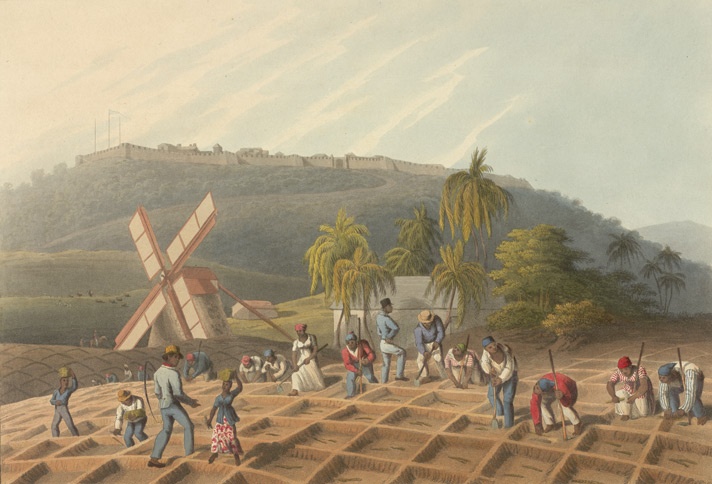
Planting cane in the West Indies

Planting cane in the West Indies

So, Pinterest.  Maybe I did have something to pin after all. I started pinning all kinds of material: covers of all the books I’d  used in my research (a visual bibliography); photos and drawings from the period of sugar mills and sugar mill technology; archaeological sites, sugar mill ruins, maps and prints of people, places, and flora and fauna from the colonial days; figural art from the Yoruba, Ibo, and Congo cultures; and photos I’d taken on visits to the island of historical sites such as the Sephardic cemetery and colonial fortifications that were still standing. My pins became even more encompassing as plot points began to coalesce into a full story.  I was pinning costumes from current celebrations – Junkanoo, Sugar Mas, Cropover –  that had  been going on for centuries in the British Caribbean islands because they have close visual connections to African tribal art and ceremonial rituals. I pinned links to contemporary kaiso/calypso music, which is heir to a musical tradition extending back to the plantation days and which offers sly social commentary on the ruling class (as well as a call to dance and drink troubles away). One of the subplots of my novel involves mechanical fancies run by water power. I found all kinds of places in the world with miniature mechanical villages and pinned pictures and links to them.

800+ pins later, I’ve discovered that Pinterest is a wonderful writers’ resource. It gathers all my sources and lets me see them in one place. I can’t emphasize how important it is to see your novel visually, not just as words on a page. Looking at things seems to activate a different kind of knowing and understanding than reading does. Using Pinterest makes my story richer.

You can find Robin Latham’s Pinterest page at Tradewinds: A Novel in Progress

The Trouble With Flashbacks and Backstories

By Larry Kahaner

One of the best things about writing this blog is that it forces me to confront my own writing issues. Currently, I’m wrestling with a particular flashback in my current novel. You probably know that flashbacks and backstories are different although they are similar. Both devices occur in the past and writers use them to give readers a better understanding of a character or situation through past history and behavior.320px-Flashback

Backstories usually are standalone narratives whereas flashbacks are a character’s recollection. (I know that some will argue these definitions but I’m going to move on anyway as you consult your dictionaries.) Both suffer from the same malady, however. They interrupt the forward movement of your story.

In my particular case, the flashback is way cool. I’ve written it well and in real time. It moves like the wind and gives a great insight into my main character. On the minus side, it stops the main story dead in its tracks. The forward motion that I’ve worked so hard to achieve is halted, and I will have to work even harder to build up acceleration again.

The questions I have to ask myself is: Is it worth it? Cut out or leave in?

Actually, there’s a third choice. I could make the flashback shorter in hopes that the reader will speed over it. Nah. I either want to tell the whole flashback story or not at all.

Because I come from a journalism/non-fiction writer background I opted to brutally cut the flashback. Here’s the section under discussion:

“As the minister spoke, Mike remembered the funerals in Iraq. They were not ceremonies like today’s but what they called ‘ramp funerals’ where caskets containing service personnel were wheeled onto military transports for burial back in the States. Their buddies stood and watched as the caskets disappeared into the belly of a cargo plane. That’s what passed for funerals during the war.

He had his fill of death in Iraq. Mike saw too many pals die, too many ramp funerals, and the memories made him sick to his stomach.”

[Right here I had the rather long but again, very exciting flashback incident that occurred during the First Iraq War. It’s too lengthy to show. So, assume that you did read it and continue with the current day’s scene.]

“Now, here he was once more, watching the burial of one more comrade who died in the line of duty. Comrade? She was more than a comrade.

Did you miss reading the flashback? If I didn’t say anything, you wouldn’t have noticed anything was missing. I added “Comrade? She was more than a comrade.” to highlight my main character’s emotional state and offer a bit of backstory, as it were, about their relationship.

In summary, I cut several pages of flashback and replaced it with seven words.

My word count took a hit, but I have a better book.

How do you handle flashbacks and backstories? Any advice for others facing the keep-or-cut dilemma?

How Good Does Your Novel Have to Be?

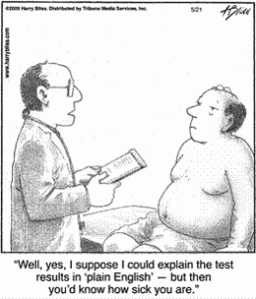
By Larry Kahaner plainenglish

When I was just starting my non-fiction writing career, I wanted to be published in the Sunday New York Daily News magazine. I had been born and raised in Brooklyn and to me the pinnacle of  ‘getting in print’ was this publication read by millions. It was the tabloid newspaper for the masses and I wanted to reach that audience. For those who have not read the magazine, there was not much to the stories. They were mainly human-interest stuff, some sports, local color… you get the picture. Literary masterpieces they were not.

As much as I tried, I could not get them to buy my material. I tried for years and I was perplexed because I would read the stories and say to myself, ‘I can write better than this. Why won’t they take my stories?’

Fast forward to Boston University’s graduate school in Science Journalism where I met a professor to whom I was telling this tale. He said: “Maybe they don’t want anything better than what they have.”

The light bulb went on in my head. He was right. Not to sound cynical, but the editors were happy with the quality of the stories they printed. They didn’t want anything more clever, better written or exciting.

How does this to relate to novel writing? I read a lot of thrillers and some of them are what a reviewer friend of mine calls “perfectly fine.” They don’t blow the roof off the house or some such saying but they are enjoyable and satisfying to read. The most successful and bestselling authors know this. They don’t spend a lot of time concocting complicated phrases or sentences. They write simply, clearly and provocatively.

That’s the real secret of novel writing success. Fancy, witty and clever stories are okay… if you want to write them …  but nothing makes readers happier than a compelling story, simply told,  with a satisfying ending.

Leave the high falutin’ words for your dissertation. Just relate the story as if you were telling a friend. And, as I always say, you have only one job: make the reader turn the page.


Novelists, Find Your Voice

By Larry Kahaner

Don’t be afraid to throw away your words. They’re not sacrosanct.

Don't be afraid to throw out your early pages.

Don’t be afraid to throw out your early pages.


When writing many of my non-fiction books including AK-47: The Weapon that Changed the Face of War and Cults That Kill: Probing the Underworld of Occult Crime, I generally threw out the first 50 or so pages during rewrites.

It takes a while to get your writing motor running,  to find your voice, which can change depending upon the book you’re writing. For me, the process takes about 50 pages. Some fiction writers swear that it takes them 100 pages before they hit the proper  voice. These first hundred pages then get tossed in the trash.

Rest assured that this is normal.

First, what is voice?

I like to think of voice as having two components. The first is the author’s style. It’s who you are, your personality, the way you see the world. Are you a serious person or a wise aleck? Clever or subtle? Upbeat or a downer? These traits are reflected in how you write. They belong to you, so own them. This voice generally stays the same but can change somewhat based on what you’re writing. When I write serious non-fiction, one side of my personality shows through, the journalistic, down-to-earth side. When I write novels, my less serious side shows through. However, my basic writing style – which I define as accessible, easy to understand and ‘talk-directly-to-the-reader’ – is always the same. That’s who I am as a writer.

The second meaning of voice is the speech, tempo and chosen words of the narrator. Is the dialogue long-winded or fast-paced? Do the words fit the time frame and environment? Is the narrator convincing? Does the dialogue sound true?

In most cases, the first kind of voice generally stays the same – with mild exceptions – because it’s you. The second will change with the story.

Now, back to finding your book’s voice. My method (and that of many writers I know) is to let the draft sit for a while, as long as several weeks or a month. When you come back to it, it’s as if you’re seeing it for the first time. Now, instead of reading it as the writer, you’re reading it as a reader.

Trust your instincts and your first reactions to the book. Be honest and objective. Keep your ego in check. It may sound trite but ask yourself: Is the book true to who I am, what I want to say and how I want to say it?

Read more…

Start Your Novel Off With a Bang

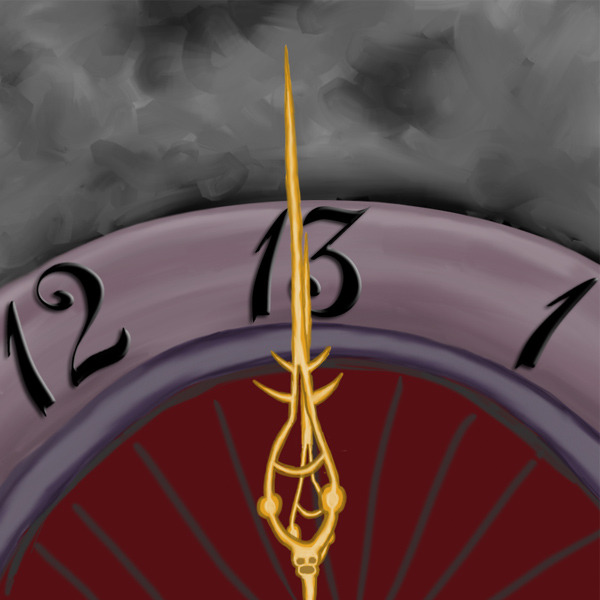
13_o__clock_by_Mushymudpie

by Mushymudpie at mushymudpie.deviantart.com/

By Larry Kahaner

Don’t Be A Victim Of Opening-Line Paralysis

I suspect you’re eager to keep reading because I have teased you with the notion that I can help you. That’s because I wrote a strong, provocative opening line.

Non-fiction writers, especially journalists, know about the importance of a strong lede. (Yes, we spell it that way in the biz.) I’m sure you do this for your own writing projects whether they’re reports, whitepapers or anything else you churn out.

Here are some ideas for writing compelling opening lines:

1 – Don’t worry about it – for now. For starters, just write anything that sounds halfway decent. There’s plenty of time to hone your awesome first lines later. To me, first lines are like titles; you have working titles and then make it better when you’re done with the book. Don’t let ‘first line perfection’ hold you up.

2 – Study classic first lines. Although this list purports to be the 100 best first lines, some are stinkers, (especially the longer ones) but most are excellent. Why? See the next point.

3 – As a writer you have just one job. Get readers to read the next line and then the next and the next and then get them to turn the page. If you can do that, you are on the way to being successful. See my guest blog about coercing readers to turn the page on The Thriller Guy’s blog.

The best first lines compel you to continue reading. They are provocative. They make you curious about what comes next.

Check out the opening lines of my novel-in-progress:

Read more…

Do You Have The ‘Authority’ To Write A Novel?

By Larry Kahaner
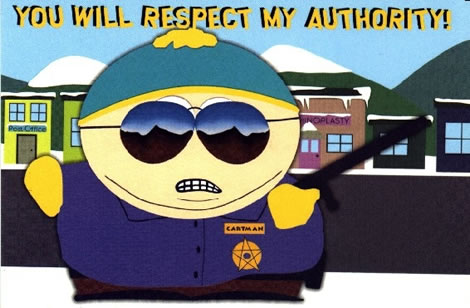
My non-fiction books like AK-47 and Values, Prosperity and the Talmud (pretty wide range, eh?) demand a lot of research. Not only do I read and study but I interview tons of people, which comes naturally to me as I earned my writing chops by being a newspaper and magazine reporter. Actually, I prefer interviewing people to book research although they complement each other and both have their place.respect-my-authority

As the research process continues, I continually ask myself: “Is it time to stop researching and start writing?”

The answer for me is when I see the book’s overall theme materialize in my mind. This doesn’t mean that I know everything I need to know. It does mean that I know enough that the ‘big’ story is clear and apparent. I actually can see a beginning, middle and an end.

Nothing is set in stone, though. It’s subject to change, even major changes, but I am confident enough to begin.

The same goes for fiction. Novel writing requires research. Some stories, especially historical fiction, may require a great deal of research. But the question is the same: “When do I have the authority to begin writing?” And the answer is the same, too. When you see the overall story clearly. When it all makes sense to you not just as a writer but as a reader, too.

Read more…

Fictional Villains Must Still Kick the Dog

By Larry Kahaner
One of the challenges of using your non-fiction skills and experience to write fiction is the issue of characters. Much of work-related prose doesn’t feature people. There are exceptions of courses – you may have written a profile – but even then, you only touch on the person’s personality because the story is usually more about his or her work.
Alfred-Hitchcock

“In the old days villains had mustaches and kicked the dog.” — Alfred Hitchcock

Novel writing is different. It’s all about characters. It’s all about how they feel, how they act, how they relate to others, their demons and on and on. Readers want to know these people in great detail. If you, as a writer, don’t make the reader understand and care about the characters (and that holds for the bad guys, too) then no amount of clever plotting is going to make your novel a success.

How to do this? Simple.

In books, as in life, we judge people by their thoughts and actions, but mainly by their actions. If you want the reader to emotionally connect with your characters have them do something that elicits an emotional response. For example, Shakespeare had an easy and immediate way of telling the audience who were the evildoers. They would walk on stage and kick a dog. They would do it in a way as if the dog were a contemptuous creature. What could be a more heinous act but to hurt an innocent dog? On the other hand, as movie director Alfred Hitchcock noted:

In the old days villains had mustaches and kicked the dog. Audiences are smarter today. They don’t want their villain to be thrown at them with green limelight on his face. They want an ordinary human being with failings.


I partly disagree with Hitch. Although audiences are indeed more sophisticated than those before them, the old villain tropes still work – and they work well – because they register an emotional click of disgust from readers.

Read more…

Post Navigation

Improve With Soo-Self Development

Good habits, productivity and happiness.

Soul Escape

This and That...

Poetry by thehobartchinaman

Poetry, experimental, ditties, mostly with a twist. From www.thehobartchinaman.wordpress.com

Self Help Blog

Positive well-being and Mental Health

How To Love Your Life

Change a habit and change your life!

Subdued Flamboyance

Poetry by Dr. Abhinav Majumder

BrawBlether

Thoughts about Scotland & the world, from a new Scot

siggiofmaine

An Artist, Photographer, Writer, Poet

Silent Songs of Sonsnow

"I have enough time to rest, but I don't have a minute to waste". Come and catch me with your wise words and we will have some fun with our words of wisdom.

Darrick Dean

Find your Purpose. Find your Story.

The Lime Squeezes; The End of The Beginning

Semi-colons: the beloved penny; stop killing: poetry

keithgarrettpoetry

Smile! You’re at the best WordPress.com site ever

Fantasy Road

The Journey begins here.

Beyond Love Existence

- A part of JTCHlife’s mind

Creole Bayou

Laissez les bons temps rouler!

Veronica Knox

Artist & Author