Larry Kahaner

Drugs: The Author’s Other Drug of Choice – Part 2

Drugs: The Author’s Other Drug of Choice – Part 2

This guest blog from former workmate Gerry Karey, who blogs at Unhinged, grew out of a blog I wrote about alcohol and authors titled Don’t Drink and Write.

When I posted the blog on my Facebook page, Gerry commented:

“What about pot?”

To which I answered: “What about it?”

He took the challenge and looked at famous authors and their drug proclivities.

We had two bags of grass, seventy-five pellets of mescaline, five sheets of high powered blotter acid, a salt shaker half full of cocaine, and a whole galaxy of multi-colored uppers, downers, screamers, laughers… and also a quart of tequila, a quart of rum, a case of Budweiser, a pint of raw ether and two dozen amyls.  — Hunter S. Thompson, Fear and Loathing in Las Vegas

thomspons

“I hate to advocate drugs, alcohol, violence, or insanity to anyone, but they’ve always worked for me. – Hunter S. Thompson

That’s quite a picnic hamper. Mescaline, acid, cocaine, uppers, downers, screamers and laughers, oh, my.  If you can remember the 60s, you weren’t there.

Thompson was one of several mid-twentieth century writers who celebrated the use of drugs, particularly hallucinogens, and inspired and influenced a cultural movement.

Thompson is credited as the father of Gonzo journalism, a blend of fact and fiction. He may have captured the gestalt of the era as well as any writer. You just couldn’t believe everything you read, but it was an exhilarating, crazy ride.

A 2005 biography is entitled, Hunter S. Thompson: An Insider’s View of Deranged, Depraved, Drugged Out Brilliance. Thomas somehow managed to live until he was 68 when he committed suicide.

“I hate to advocate drugs, alcohol, violence, or insanity to anyone, but they’ve always worked for me,” Thompson once said. Until it didn’t.

Jack Kerouac was the key figure in the “Beat Movement.” A draft of his seminal, stream-of-consciousness novel, On The Road, was written in just three weeks and typed on a continuous, one hundred and twenty-foot scroll of tracing paper sheets that Kerouac cut to size and taped together.

It is a fascinating read. But great literature? Maybe not so much.

Kerouac continued to writes books and poetry, but nothing he wrote equaled the impact of On The Road.  How could it?

Drugs were very much part of the scene in On the Road, but Kerouac’s personal drug was alcohol. He died in 1969 at the age of 47, as a result of an internal hemorrhage caused by cirrhosis.

boroughs

“Whether you sniff it smoke it eat it or shove it up your ass the result is the same: addiction.” – William S. Burroughs

Major writers of the Beat era, all close friends of Kerouac, were Allen Ginsberg (LSD), Ken Kesey (psychedelics), William Boroughs, who was addicted to heroin, and Neal Cassady, who died of a drug overdose. “Whether you sniff it smoke it eat it or shove it up your ass the result is the same: addiction,” Burroughs said.

Other 20th Century writers who experimented with or used drugs: W.H. Auden, Jean Paul Sartre and Philip Dick (amphetamines). “Drug misuse is not a disease, it’s a decision…an error in judgment,” said Dick, who also used marijuana, mescaline, LSD, sodium pentothal. Hubert Selby, was addicted to pain killers and heroin that were first administered after surgery; Stephen King, who managed to kick his addiction to cocaine and other drugs; and Aldous Huxley, mescaline (see Huxley’s The Doors of Perception).

Would Dick have created his fantastic fictional worlds without drugs?  Would Hunter Thompson have been Hunter Thompson? Would any of those writers have achieved what they did?

Neurobiologist R. Douglas Fields asks: “Can the creative product—a song, painting, poem, or book—justify the sacrifice and harm that will accompany conducting the creative pursuit under the influence of drugs? If we accept the use of marijuana, cocaine, methamphetamine, LSD, and alcohol by rock musicians to achieve creative breakthroughs and delight us with their performance, what does that say about us in being willing to accept the destruction of another human being for our entertainment?”

“Drugs are a waste of time. They destroy your memory and your self- respect and everything that goes along with your self esteem,” songwriter/musician Kurt Cobain said.  Cobain struggled with heroin addiction and depression. He committed suicide in 1994, at age 27.

I do not know if this survey will persuade anyone not to use drugs (with the exception, perhaps of marijuana as a reward after a long day of writing). That’s not my intent. But I will reiterate Larry Kahaner’s advice to aspiring writers – all writers, for that matter:  “Write a lot and read a lot. Those are the only habits that work all the time and every time.”

There are no short cuts.

Drugs: The Author’s Other Drug of Choice – Part 1

Drugs: The Author’s Other Drug of Choice – Part 1

This guest blog from former workmate Gerald Karey, who blogs at Unhinged, grew out of a blog I wrote about alcohol and authors titled Don’t Drink and Write.

When I posted the blog on my Facebook page, Gerry commented:

“What about pot?”

To which I answered: “What about it?”

He took the challenge and looked at famous authors and their drug proclivities.

Here’s Part 1 of his report.

“Drugs are a bet with your mind.” –  Jim Morrison,  1943-1971, poet, songwriter.

baudelare

Charles Baudelaire: Proud member of the Club of Hashish Eaters

In the 19th Century the drugs of choice for writers and poets was opium and hashish, expanding to a cornucopia of substances in the 20th Century.

Why the link? R. Douglas Fields, a neurobiologist, writes on a Scientific American blog: “Statistics show that among all categories of creative artists, writers suffer by far  the highest incidence of bipolar disorder. . . Cured of their mental illness, such artists and writers would be gutted of their creativity and stripped of the means to realize it.”

And many artists who have “healthy minds choose to accept the Faustian bargain an induce madness with drugs to reach new summits in their art. . . some artists are willing to endure the self destruction of devastating mood disorders and psychosis of mental illness to fuel creative works of art by deliberately inducing these mental states with drugs to unbalance an otherwise health brain.”

OPIUM

Cultivation of opium poppies for food, anesthesia and ritual  purposes dates back to the Neolithic Age. It was a potent form of pain relief for thousands of years. Widespread use of opium continued through the American Civil War, before giving way to morphine, which is processed from opium.

In 19th Century Britain, opium was cheap, legal and widely available. Morphine was commercially available by the early 1820s.

English essayist Thomas De Quincey, 1785-1859,  tried opium in 1804 to relieve the pain of a toothache, taking it in the form of  laudanum – as many Victorians did – a tincture of opium dissolved in alcohol. The effect was immediate and transported De Quincey to another realm.

He wrote that the pain vanished and he was “swallowed up in the immensity of those positive effects which had opened before me — in the abyss of divine enjoyment thus suddenly revealed. Here was a panacea for all human woes: here was the secret of happiness. . .  happiness might now be bought for a penny, and carried in the waistcoat pocket: portable ecstasies might be had corked up in a pint bottle: and peace of mind could be sent down in gallons by the mail coach.

 De Quincey was addicted within a few years and tried kick the habit with little success.

 De Quincey’s Confessions of an English Opium-Eater  (1821) launched a fascination with drug use and abuse, writes Robert Morrison,  Queen’s National Scholar at Queen’s University in Kingston, Ontario. De Quincey “invents recreational drug taking, but he also details both the lurid nightmares that beset him in the depths of his addiction as well as his humiliatingly futile attempts to renounce the drug.”

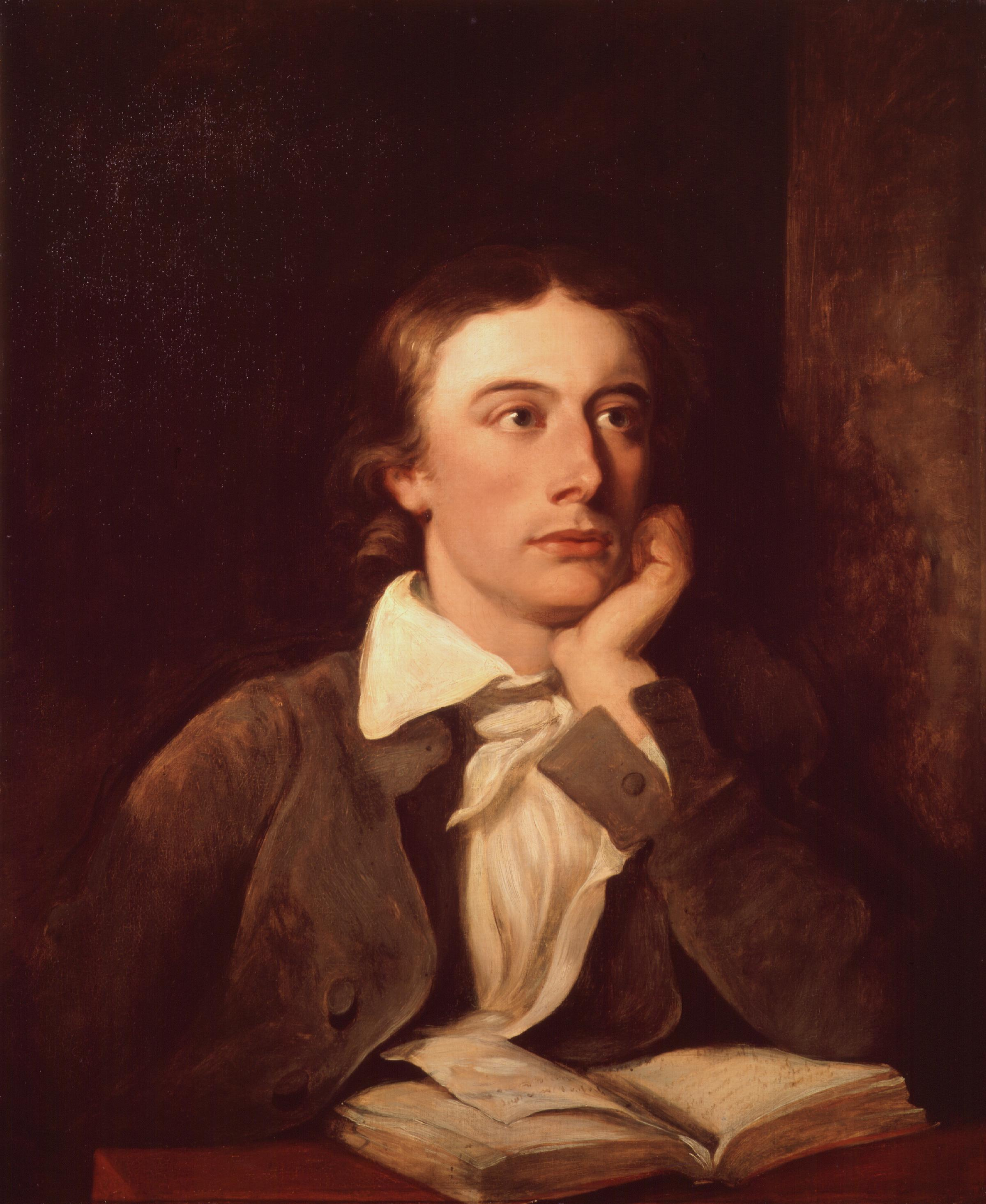
John_Keats_by_William_Hilton

John Keats: Opium Guy

De Quincey described the dark side of opium addition in Confessions, noting the states of gloom “amounting at last to utter darkness,” and lurid nightmares of persecution, violence, incarceration, and death,” Morrison writes.

However, De Quincey overbalanced “on the side of the pleasures of opium; and…the very horrors themselves, described as connected with the use of opium, do not pass the limit of pleasure.”

Samuel Taylor Coleridge wrote that his poem, Kubla Khan, was composed one night after experiencing an opium-influenced dream, before which he read a work describing Xanadu, the summer palace of the Mongol ruler and  Emperor of China Kublai Kahn. Lord Byron, John Keats and Percy Shelly all used opium.

Did it help make them great poets?

M.H. Abrams for his senior honors thesis at Harvard in 1934 wrote how an opium-using poet, “utilized the imagery from [opium induced] dreams in his literary creations . . .”

The great gift of opium, Abrams wrote,  “was access to a new world; one which ordinary mortals, hindered by terrestrial conceptions, can never, from mere description, quite comprehend. It is a world of twisted, exquisite experience, sensuous and intellectual.”

Before your reach for the pipe or the laudanum, consider Althea Hayter’s 1968 book, Opium and the Romantic Imagination.  Hayter suggests that opium use reveals “some of the semi-conscious processes by which literature begins to be written.”

Opium-induced dreams may have inspired the Romantic poets, Hayter writes, but opium works “on what is already there in a man’s mind and memory.”  What separates the Romantic poets from the run-of-the-mill opium users – and less talented writers –  is being able to communicate these visions in a poem.

Opium might provide “that heightening of experience that every poet wants to feel and then to impart. . . But it can never be a substitute for innate imagination . . .”

Although opium may present the writer with unique material for his poetry, “it will probably take away the will and the power to make use of it.”

Opium won’t transform you into the next Byron or Shelly. Not even close. Opium’s better known cousin today is heroin, which is derived from morphine. Heroin will not put you on the road to literary brilliance, but it can kill you. You certainly don’t need me to tell you that.

HASHISH

Confession, and I can say this because I am not planning to run for office, I smoked pot and I inhaled. I never attempted to write while I was high. I never wanted to do much of anything, as I recall.

Napoleon’s troops discovered hashish in Egypt and brought cannabis back to France where it became a popular recreational drug.

The Club des Hachichins (Club of Hashish Eaters), active from 1844 to 1849,  numbered Charles Baudelaire and Alexandre Dumas among its members. Baudelaire reportedly didn’t personally use hashish much, but observed the effects of the drug.  In 1860 he published  Les Paradis Artificiels  (Artificial Paradises).

“It sometimes happens that people completely unsuited for word-play will improvise an endless string of puns and wholly improbable idea relationships . . . But after a few minutes, the relation between ideas becomes so vague, and the thread of your thoughts grows so tenuous, that only your cohorts… can understand you.”

Been there, done that.

“At first, a certain absurd, irresistible hilarity overcomes you,” he wrote.  “The most ordinary words, the simplest ideas assume a new and bizarre aspect. This mirth is intolerable to you; but it is useless to resist. The demon has invaded you…”

The senses become “extraordinarily keen and acute . . . In sounds there is colour; in colours there is a music…” Baudelaire wrote. All is “complete happiness. There is nothing whirling and tumultuous about it. It is a calm and placid beatitude.”

Every philosophical problem is resolved. Difficult questions become clear and transparent. “Man has surpassed the gods.”

Eventually you come down, of course, and Baudelaire concluded that while hashish enhances the imagination it is highly dangerous to subordinate all such processes to the drug. For the creative artist to believe that they can create only when “high” is a disaster.

Based on my limited personal experience, the last thing I wanted  to do when high was sit in front of a typewriter (did I mention that it was a long time ago), and write. Taking Baudelaire at his word, I think it unlikely the legalization of pot will lead to a literary renaissance in Colorado. However, it may become the most blissfully happy state in the country.

End of Part 1

Watch this blog for Part 2 of Drugs: The Author’s Other Drug of Choice


Don’t Drink and Write

Don’t Drink and Write

By Larry Kahaner

This blog is aimed at new writers. If you’re an experienced writer, or an alcoholic, or both, don’t bother reading any further. Well, okay, you can. But what follows probably won’t  resonate with you. You’ll most likely sniff in defiance and pronounce it nonsense. Or, you’ve already handled the situation.

http://moreintelligentlife.com/

image from: Intelligent Life magazine

Many new writers try to emulate  their favorite authors. They somehow think that by using the same pen, the same notebook, following the same schedule and oddball habits (I only write in my pajamas with the cuddly bear on the front) that this will bring them the same success as those they admire. As I’ve said many times, the only habit that aspiring writers should copy from those before them is to sit down and write. Write a lot and read a lot. Those are the only habits that work all the time and every time.

One of my sins is bluntness but I can’t help it. Many times I’m asked during interviews about when I write, how I get my inspiration, where I get my ideas and I try to be polite… I really try… but sometimes I just can’t pull it off. I usually blurt out that these things don’t matter. As gently as I can I note that we all walk differently, we eat differently, we talk differently. It stands to reason that we all write differently so why copy anyone else? I’m usually marked as a nasty individual who offers no help to the nascent scribe. It’s not how I want be remembered.

Which brings us to alcohol.

So many brilliant authors drink too much. Many are functioning alcoholics and this penchant for drinking has led many newbies to believe that drinking is a prerequisite for perfect prose. How can you blame them when well respected authors boast of their alcoholic intake in quotes that we love to put up on our walls?

“Too much champagne is just right.” – F. Scott Fitzgerald

“I began to think vodka was my drink at last. It didn’t taste like anything, but it went straight down into my stomach like a sword swallowers’ sword and made me feel powerful and godlike.” – Sylvia Plath, The Bell Jar

“After the first glass, you see things as you wish they were. After the second, you see things as they are not. Finally, you see things as they really are, and that is the most horrible thing in the world.” – Oscar Wilde

Goodreads has 442 quotes about drinking. There’s even a top ten list of 15 great alcoholic writers.

Why do writers drink? That same reason that anyone else drinks. “Boredom, loneliness, habit, hedonism, lack of self-confidence; as stress relief or a short-cut to euphoria; to bury the past, obliterate the present or escape the future,” notes Blake Morrison, writing in the Guardian.  Morrison also points out that in Olivia Laing’s book The Trip to Echo Spring, about six famous alcoholic writers, that there may not be a simple answer as to why many famous writers drink but I believe the above short list takes a strong cut at it.

I’ve been a writer, journalist and published author for many years and I know many writers. Some of them drink a bit more than most, but that may be because they’re my friends. Self-selection and all that. But to a man and woman, they report that alcohol doesn’t help their writing. In fact, it hinders it.

Here’s one comment from a dear friend and prolific book author:

“I feel free and creative when I write in the company of wine. But the next day, usually, my grammar, syntax and coherence of prose look like crap.”

From another, whose non-fiction books are terrific, well-written and well-received. I asked him whether drinking helps his writing and he responded:

“I hate to sound like a prude, but I feel most free and creative when I’ve done a thorough job of reporting and know what the fuck I’m talking about.”

Does alcohol have a place in an author’s arsenal? Certainly, as a relaxer, a way to unwind after a day of hard writing and as social lubrication. It also can offer a short-term creativity kick. Another author friend who writes a blog under the moniker Thriller Guy offers this:

“… say you’ve got a problem that you can’t figure out – your character has been captured by an evil CEO and Our Hero is imprisoned in a laboratory where the resident mad scientist and his minions are threatening to suck the very essence out of his body. (Think Neo in The Matrix) How is Our Hero going to escape? TG can tell you from long experience, if you don’t know how to get your man (or woman) out of this pickle when you head into this scene, the answer is probably not going to just jump into your head. Trying to hammer out a solution to a problem like this can drive you nuts. What you need to do is to stop trying to figure out the answer, and let your subconscious come up with a solution. To do this you need to stop your brain from working so hard, to let the well fill up, by itself. Send the kiddies off to bed (if there are any kiddies) kiss the wife goodnight, (if there is a wife) pour yourself a stiff drink and settle into your chair. Then have a couple of more drinks. You can noodle away at the problem while you’re sitting there, but only in a general way. Drink too much, stagger off to bed, and go to sleep. And if you’re lucky, the next morning, when you go back to work, the answer will pop into your head. Almost unbidden. Ditto if you’re trying to come up with a title, solve a plot problem, searching for a “voice” to tell your story, a structure on which to build your novel. You need to stop trying to solve the problem, and let your writer’s brain solve the conundrum on its own. This is actually one of the few thrilling moments when being a writer seems almost like magic.”

He’s right.

Believe me, I like a martini in the evening. Occasionally, a few more, but I must tell you that of all the professional writers I know, the ones who write drunk do so in spite of their drinking and not because of it. They are functioning alcoholics, or close to the edge of it, who, if they weren’t writers would trudge off to the office every day, slightly hungover and put in a day’s work despite their condition. Think Mad Men. They drink because their body requires it, not because it makes them more creative. In fact, I often wonder how much better the words from Hemingway, Cheever, Poe or London would have been without their booze. We’ll never know.

I’m sorry to burst your romantic bubble but drinking doesn’t help writing. It hurts, and not  just the writing but your life in general. I leave you with this, an excerpt from the Handbook of Medical Psychiatry, 2nd Edition, edited by David P. Moore and James W. Jefferson. Sadly, it describes many famous drinking writers to a ‘T.’

“When alcoholics do drink, most eventually become intoxicated, and it is this recurrent intoxication that eventually brings their lives down in ruins. Friends are lost, health deteriorates, marriages are broken, children are abused, and jobs terminated. Yet despite these consequences the alcoholic continues to drink. Many undergo a ‘change in personality.’ Previously upstanding individuals may find themselves lying, cheating, stealing, and engaging in all manner of deceit to protect or cover up their drinking. Shame and remorse the morning after may be intense; many alcoholics progressively isolate themselves to drink undisturbed. An alcoholic may hole up in a motel for days or a week, drinking continuously. Most alcoholics become more irritable; they have a heightened sensitivity to anything vaguely critical. Many alcoholics appear quite grandiose, yet on closer inspection one sees that their self-esteem has slipped away from them. Most alcoholics also display an alcohol withdrawal syndrome when they either reduce or temporarily cease consumption. Awakening with the ‘shakes’ and with the strong urge for relief drinking is a common occurrence; many alcoholics eventually succumb to the ‘morning drink’ to reduce their withdrawal symptoms.”

Sound like any writing heroes of yours? Yeah, I thought so.

The Secret to Writing That Nobody Tells You

I am reblogging Jane’s post because it’s something that I’ve been harping on for years. Writing is work. You put your ass in the seat and write. Only when you can do this day in and day out can you call yourself a writer. You write when you feel like it and you write when you don’t feel like it – just like everyone else and their job. There are good days and bad days but you still go to work, right?

Endacott Creative's avatarWORD SAVANT

When I coach people, there is an ugly truth about writing that I often hold back from them. It’s something you can only learn through gut-wrenching, razor’s edge, shard of broken glass experience.

There is no magic to writing, none at all. It’s nothing but grueling

No magic, no easy formula, no genius algorithm. There is no “secret” that is going to make everybody love your work, buy all your books, tell their friends about you, and get stars in their eyes when they hear your name.

It is simply monotonous, repetitive work.

I recently finished the manuscript for my first novel. For eight years I struggled to finish it. And do you know what finally helped me finish it?

Monotonous, repetitive work.

I did it by sitting down (almost) every day and writing a minimum of 500 words.

Some of those days were pretty good days. I would say…

View original post 828 more words

5 Reasons Bullying Made Me A Better Writer #1000Speak – Building On Bullying

I am reblogging this post from Sacha Black because of the insight she has about how bullying made her a better writer. I was never bullied, but I understand how being bullied can make someone think and feel differently than others. That’s the part – the thinking and feeling differently than others part – to which I can relate, understand and appreciate, which I believe makes me a better writer. I applaud Sacha for speaking out.

Sacha Black's avatarSacha Black

5 Reasons Bullying Made Me a Better Writer

I had to coax myself into posting this. Not because I didn’t want to do a post for #1000Speak, but because bullying is one of those things that everyone has been affected by, and I am no exception. It’s all a little close to the bone. Bullying is one of those universal topics that touches the lives of almost everyone. But I want to focus on the positive. On why being bullied made me a better writer. Without having been bullied I wouldn’t have focused on writing in my youth, and I probably wouldn’t have realised writing was my dream. So am I compassionate with the bullies? No, probably not, I know that’s the point of 1000speak, but, I am grateful for the experience of bullying.

View original post 999 more words

The ‘Starving Writer’ Notion Needs to Die

The ‘Starving Writer’ Notion Needs to Die

By Larry Kahaner

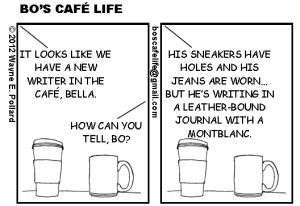
When I decided to make my living as a writer, lo, those many years ago, I realized that I better learn about money and investing. Why? Because I knew that being a writer can sometimes be a financial up-and-down kind of life. If you’re a writer, or plan to become one, you also better learn how to hanbella-new-writer-in-cafedle your money. If not, you’re in for a lifetime of disappointment, frustration and regret.
First, the good news. Being a writer is a great job. Do I really need to explain why?

However, some writing jobs or books don’t pay a lot of money. That’s why you have to be extra smart about your finances and money management.

After years of writing about business (one of my specialties) and investing my own money, I decided to offer presentations to colleges about personal finance. I call it the Fiscal Fitness Boot Camp and my goal was to help college students prepare for financial adulthood. During a presentation at the University of Connecticut, Waterbury, an attendee came up afterwards and asked me about my assertion that anyone could become a millionaire or more by the time they retired simply by saving and investing. She said: “I’m planning on becoming an artist and artists often don’t make a lot of money. Can I still become a millionaire by age 65?”

My answer was ‘yes,’ and for purposes of this blog change the word ‘artist’ to ‘writer’ and my answer remains the same.

I explained that the key to becoming rich is not about much you make, but how regularly you save and invest. By putting aside what you can each month into a stock index fund when you’re in your 20’s or 30’s, it will grow at around 9 percent annually for many decades and you’ll be a millionaire by age 65. (If you’re past these ages, this works, too, but you’ll end up with a lower amount.)  There will be hills and troughs so you have to hang tough. Through the power of compounding (remember compound interest from middle school?) your investments will grow large. See this blog for details.

“What if there are months that I have no money invest?” she asked.

I replied: “If you miss a month or two, your nest egg won’t suffer in the long term, but try to put something away, even if it’s only $20, every month. Even that small amount will make a difference if you start today.”

Is it more complicated than that? Yes, but you don’t have to know everything right now. Take it slow and no whining about how you’re a writer/artist/musician and you shouldn’t have to know about money. That kind of thinking is for suckers.

Remember, the starving writer is a myth perpetrated by people who find poverty a romantic notion. If anything, penury keeps you from producing your best works.


The adage ‘do what you love and the money will come,’ seems a bit outdated and unrealistic to me. I believe the true key to life is to discover what you love to do and then figure out how to make a living at it.

For those of you who are interested in learning more, drop me a line and I’ll suggest some easy-to-understand websites and books to get you started.

I’m Just Trying Not to be a Jerk

I’m Just Trying Not to be a Jerk

By Larry Kahaner

One of the challenges and frustrations of writing is transforming what’s in your brain into words. So it was with great relief that I read a post from Ebonye Gussine Wilkins who writes at The August Rose Press blog. The ARP is a publisher and they’re always looking for well-written books to publish. Natch; they’re book publishers.jerk store 2

Over the past year or so, I’ve read a lot of indie published books, just the first few pages in most cases, because you can tell immediately if they’re crap. And many of them are terrible. On the other hand, one in a thousand is a gem, worthy of a decent advance. I sometimes wish these authors had tried the traditional publishing route and gotten well paid for their efforts. Some of the junk I see stems from the fact that many indie writers believe you need volume to make money. Hence, they push stuff out the door that should have stayed inside.

Other authors just simply should not be published – at least not yet – because they haven’t yet become proficient at their craft. Look at a list of successful, well-read and accomplished authors and you will see people with slews of unpublished books still living in their computers or printed on yellowing papers residing in their closets. Why? Because these books were not worthy of being published. We need more bad, unpublished novels to stay hidden from readers. Is that too much to ask?

As an author who has been traditionally published, I had been wanting to say something like this for a long time but didn’t want to sound like a jerk or a spoilsport. Believe me, I have great respect for anyone who can actually finish writing a book, because I know how difficult a job it is. I don’t question the effort or the passion, just the outcome.

Ebonye struck the perfect tone in her blog, saying what I’ve wanted to say for a while. Thanks for writing this so I don’t have to.

Read on…

What Really Makes an Author an “Author?”

POSTED ON FEBRUARY 13, 2015

By: Ebonye Gussine Wilkins

In the face of the perceived ease of indie publishing, many more people are suddenly becoming “authors.” Some people take their time and concentrate of every word they write, how it flows, and what they want to say. They go through multiple drafts with an editor to make sure the manuscript is in the best shape it can  be. They obsess about book cover design and how the typesetting is supposed to look. They pick laminates for covers and assign ISBN numbers. After months or years of intense labor, they produce a beautiful book.

Then there are other authors that push out thirty-five pages on Microsoft Word in Comic Sans in point 16 font. They hit F7 for spell check, run the “manuscript” through an eBook formatting program, buy a pre-designed cover design and BAM instant author-dom.

While I believe that both kinds of writers will consider themselves published authors by this point, there are so many variations between the two scenarios. They are simply worlds apart. Unfortunately, many writers take the latter approach and then proclaim they are real authors to all who will listen. It’s no wonder that traditional publishing houses look down on indie publishing authors: there is a lack of quality in the finished product.

Being an author, especially a published author means that you are dedicated to your craft. You aren’t interested in just putting out a product, you want to put out the best product that you can. Your finished product is a direct reflection of you, and if you don’t get it right, it erodes your credibility. Unfortunately, it’s not just a reflection on you if you’ve published independently. Many others may begin to believe that all indie publishing authors put out shoddy work. Do us all a favor, take your work as an author seriously. Authors support each other by making sure that they produce a polished product, so support your fellow authors by doing the same. It’s the right thing to do.

Don’t Let Writing Keep You From Writing

Don’t Let Writing Keep You From Writing

By Larry Kahaner

Being a novelist is like being an actor or a painter. Sometimes you need a day job to make ends meet until your artistic talents are economically appreciated. The question for writers in particular is: do you write to pay the rent or do you take a day job that’s not writing?deadline

Some say that a non-writing job keeps your mind fresh and available for your novelizing but others (I’m in this camp) say that writing non-fiction keeps your word skills sharp and your writing-mind limber.

Those of you who are familiar with my blog and website, know that I’m a working writer, journalist and author, and that I’m also writing a novel. My website and blog are devoted to the idea that non-fiction writers bring unique and valuable skills to the fiction world.

There are also challenges. For example, this is the first time that I’m writing a book on spec which is an uncomfortable and unprecedented situation for me. I’m almost 70,000 words in (all writers know their word count even if they publicly say they don’t) and I work on my thriller when I’m not making a living by writing non-fiction.

I’m always on the lookout for others, like me, who write for a living and work on their novel when they can fit it in, so I was pleased to come across this blog by Lauren Tharp where she tackles the same issues that confront me and other working writers.

It struck me as comforting, but strangely eerie, that we have many of the same feelings and beliefs about how to handle our writing work lives and our non-worklife writing.

For example, Lauren writes: I have, and will always, put my clients’ needs before my own. Mostly because I like getting paid. I agree. Ya gotta eat and pay the mortgage. I feel lucky to earn my living as a writer and I won’t jeopardize it. However, to make time for my ‘other  work,’ as I call it, I schedule the time. I may work the morning on ‘money work’ (my other pet name) and the afternoon on my other work. Although counter intuitive, I find that when I dispatch my money work, it revs me up for my other work. I also find that time becomes more precious, so instead of spending it on Facebook or some other web-related time-suck, I will dive into my other work. My money work may sometimes creep into my other work time but not the other way.

(As an aside: A few hours ago, I got a call from a friend and editor at a magazine where I once worked who asked if I was available for a six-month assignment. It would be a weekly article of about 500-600 words. I explained that I was working on my novel – he knew that already – but he understood immediately (’cause he’s a working writer) when I told him that this work would only serve to stimulate my fiction writing. So, yes, I welcomed the additional work. Thanks for thinking of me, Jim.)

The other item that Lauren wrote was: For many writers, “mood” dictates whether or not they’ll sit down and write. However, for many successful writers, “mood” needs to either be ignored or be incorporated into their work. I agree here, too. Writers have to do their jobs whether they feel like it or not –  just like everybody else in this world.

These are just two gems from Lauren’s blog. She also quotes other working writers on how they juggle their time write their passion projects. It’s worth a look.

I’d like to add one more of my own findings. Writing for a living compels you to meet deadlines so you learn to write as best as you can in the time allotted. Even if there’s no deadline for your novel, it’s a good trait to know when to stop writing and hand it in. Too many novelists work ad infinitum, trying to eke out perfection, so they never really finish their book.

Lauren ends with this: If you, really, truly, want to write for yourself, nothing, can stop you –  not even writing.

True that.

Why Writers Should Read Crap

Why Writers Should Read Crap

By Larry Kahaner

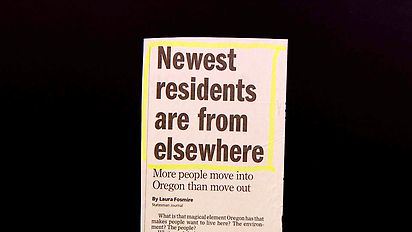
elsewhere

Thanks to sblazak.wordpress.com for this headline.

All writers get the same advice. Read the great writers; study the great works. Learn how seasoned, professional and successful authors get the job done. All true, but I maintain that it’s also crucial for writers to read crap to learn what not to do.

How do you know what’s crap? It’s not a book that didn’t sell well, although that sometimes may be a clue. It’s not one that received bad reviews either. Some of the world’s greatest books have garnered negative comments from critics. Crappy writing is like the U.S. Supreme Court’s ruling on what constitutes pornography. You know it when you see it. And you know it because you’ve mainly been reading good writing.

More concrete indications of bad prose are sections that make you go ‘huh?’ or that make you laugh because they’re so ridiculous even though the author meant it to be serious. It’s prose that’s boring, even if you can’t articulate why your mind is wandering. Crappy writing just doesn’t sound right to your ear.

Other bad writing signs include no variation in sentence length, too much telling instead of showing, overshowing, no drama, no emotion, backstories that are too long, unnecessary detail, and on and on. I’m not talking about mechanical problems with grammar or lapses in POV or tense but simple, bad freakin’ writing.

Here are some examples from real self-published books. I have changed the wording slightly so as not to embarrass the author.

Sample: “We have to move quickly, pal. We already have an elite team on its way to Nigeria to rescue the pilot. But these paratroopers are going to stand out like chocolate chips in vanilla ice cream without some assistance on the ground. I need someone to be there to meet them or they’ll be minced meat.”

What did you learn? It’s trite and boring because the writing is obvious, full of clichés and the ‘chocolate chips?’ Make it stop. Send the elite team? Why would you send the non-elite team? And yes, we do have to move quickly because moving slowly would… well.. you know.

Sample: “Hi, Bob! Sorry, I’m so late! She awkwardly returned the kiss, her kitbag bumping against her knees and her laptop bag hanging from one shoulder.”

What did you learn? First, cut the exclamation points. You’re allowed only a few per book and they should be reserved for “Look out!” like when a rock is falling on a character’s  head. Show me how she ‘awkwardly returned the kiss;’ don’t tell me. Last, who cares about her kitbag hitting her knee or that her laptop bag hanging from one shoulder? (Can a laptop even hang from two shoulders?) What does that sentence add? Mood, ambience, emotion, anything? Nothing! (I used the exclamation point because I felt that I was in danger.)

I was going to offer one more example, but this exercise made me a little sick to my stomach, so I’ll stop here.

Again, why read crap? So you know what not to do. You’re learning from others’ mistakes without people like me making fun of you in this blog. We are all guilty of lapses in writing judgment. I have made the same mistakes that I detailed here (which I seek and destroy in the rewriting process) especially because I come from the non-fiction side of writing books where some of these transgressions – like telling instead of showing – is not only acceptable but encouraged. In fact, one of the tenets of non-fiction writing is “tell people what you’re going to tell them; tell them; then tell them what you told them.” Do this in fiction and you’re inviting readers to pummel you.

My advice is to read some crap every once in a while but not too much. And don’t pay for it. Please. Read the free samples on Amazon. You only have to read (thankfully) the first few pages to learn their abject lessons.

Why Writing A Novel Is Like The AK-47 Rifle

Why Writing A Novel Is Like The AK-47 Rifle

By Larry Kahaner

ak image

The AK-47 is the most used weapon in the world, but it’s not perfect.

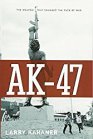
Several years ago I wrote a non-fiction book about the AK-47 rifle. It was not a gun book, per se, but a history about how this ubiquitous weapon changed the world, certainly the world of war. For those of you who never watch television, read the web or see a magazine, the AK-47 is ‘the gun’ that you see everywhere. It’s what we think an automatic weapon should look like with its distinctive banana-shaped magazine (the part that holds bullets). It’s the most popular weapon in the world because it is simple, never jams, it’s cheap, and anyone can use it effectively. It is the choice of terrorists, mercenaries and even government armies. (Click here to watch a book promotion video that I made.)

What does this have to do with writing a novel? I’m getting there.

The inventor, Mikhail Kalashnikov – the weapon also goes by his last name – knew that it was not a perfect weapon, that it had flaws but he knew that it could operate underwater or be buried in the ground, dug up a year later, and still work. It’s not a precison, beautifully- constructed weapon like the U.S. M-16 rifle, but it did the job and, unlike the M-16, it didn’t have to be taken apart on a regular basis to be cleaned. In fact, the reason why the AK works so well is because it is not perfect. The parts don’t fit precisely together so dirt and gunk don’t accumulate in the mechanism. It just kicks out the muck and keeps firing.

One of the sayings in Kalashnikov’s Soviet Union was “Perfection is the enemy of good enough,” and I was reminded of this while reading Art & Fear by David Bayles and Ted Orland. It’s a great read for all artists including writers.

An important point the authors make is that many writers are stopped in their tracks because they’re trying to achieve perfection on the first go-around.

They write:

“To demand perfection is to deny your ordinary (and universal) humanity, as though you would be better off without it. Yet this humanity is the ultimate source of your work; your perfectionism denies you the very thing you need to get your work done. Getting on with your work requires a recognition that perfection itself is (paradoxically) a flawed concept…. For you, the seed for your next art work lies embedded in the imperfections of your current piece. Such imperfections (or mistakes, if you’re feeling particularly depressed about them today) are your guides – valuable, reliable, objective, non-judgmental guides – to matters you need to reconsider or develop further. It is precisely this interaction between the ideal and the real that locks your art into the real world, and gives meaning to both.”

Being perfect is a hot button issue for me and I’ve discussed it in previous blogs. One reason for my interest is that I see too many writers not writing because they’re waiting for that perfect moment, that perfect phrase or that perfect muse to enter the room. That’s not how real writing (as opposed to dilettante writing) works. Real writers write and what comes out is never, ever perfect.

It bothers me greatly when I see writers paralyzed by their work, losing confidence, patience and even perspective because they want it to be perfect. Worse yet, not even starting or quitting because they don’t believe it will end up being perfect.

I know that ‘writing prompts’ are really popular these days so here’s one for you. Write something with the understanding that it will not be perfect. Give yourself permission to make  mistakes knowing that you can fix them later.

The freedom is exhilarating and your work will benefit. Without the constraints of perfection, you will see a marked difference in your book. That’s why National Novel Writing Month spells success for many authors. Writing 50,000 words in a month doesn’t allow you time to seek perfection, but you do rack up the words for more conscious and thoughtful rewriting later.

Kalashnikov had said that he wanted his weapon to be better designed, but he didn’t have the skills (he was a tinkerer not an engineer) or the know-how. He just made something that worked and put it out for the world to use.

That’s all you really want for your novel. It doesn’t have to be perfect; it just has to work for the reader. Fix the big mistakes, for sure. The smaller ones, too. Make it as good as you can -don’t cheap-out on the rewrites – and then let it fly.

Let readers decide if it’s perfect or not.

Post Navigation

Improve With Soo-Self Development

Good habits, productivity and happiness.

Soul Escape

This and That...

Poetry by thehobartchinaman

Poetry, experimental, ditties, mostly with a twist. From www.thehobartchinaman.wordpress.com

Self Help Blog

Positive well-being and Mental Health

How To Love Your Life

Change a habit and change your life!

Subdued Flamboyance

Poetry by Dr. Abhinav Majumder

BrawBlether

Thoughts about Scotland & the world, from a new Scot

siggiofmaine

An Artist, Photographer, Writer, Poet

Silent Songs of Sonsnow

"I have enough time to rest, but I don't have a minute to waste". Come and catch me with your wise words and we will have some fun with our words of wisdom.

Darrick Dean

Find your Purpose. Find your Story.

The Lime Squeezes; The End of The Beginning

Semi-colons: the beloved penny; stop killing: poetry

keithgarrettpoetry

Smile! You’re at the best WordPress.com site ever

Fantasy Road

The Journey begins here.

Beyond Love Existence

- A part of JTCHlife’s mind

Creole Bayou

Laissez les bons temps rouler!

Veronica Knox

Artist & Author